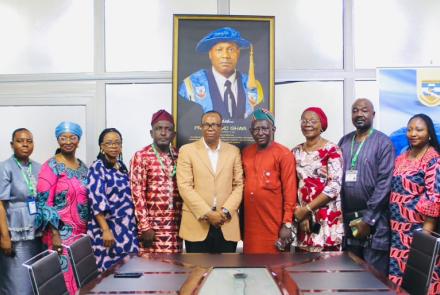
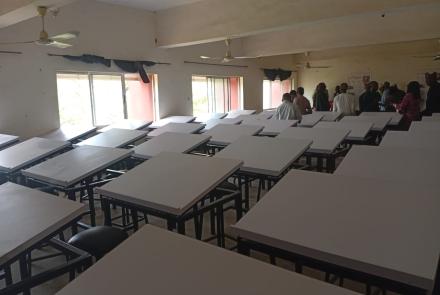
UNIJOS VC COMMISSIONS INNOVATIVE WASTE-TO-ENERGY TOILET FACILITY
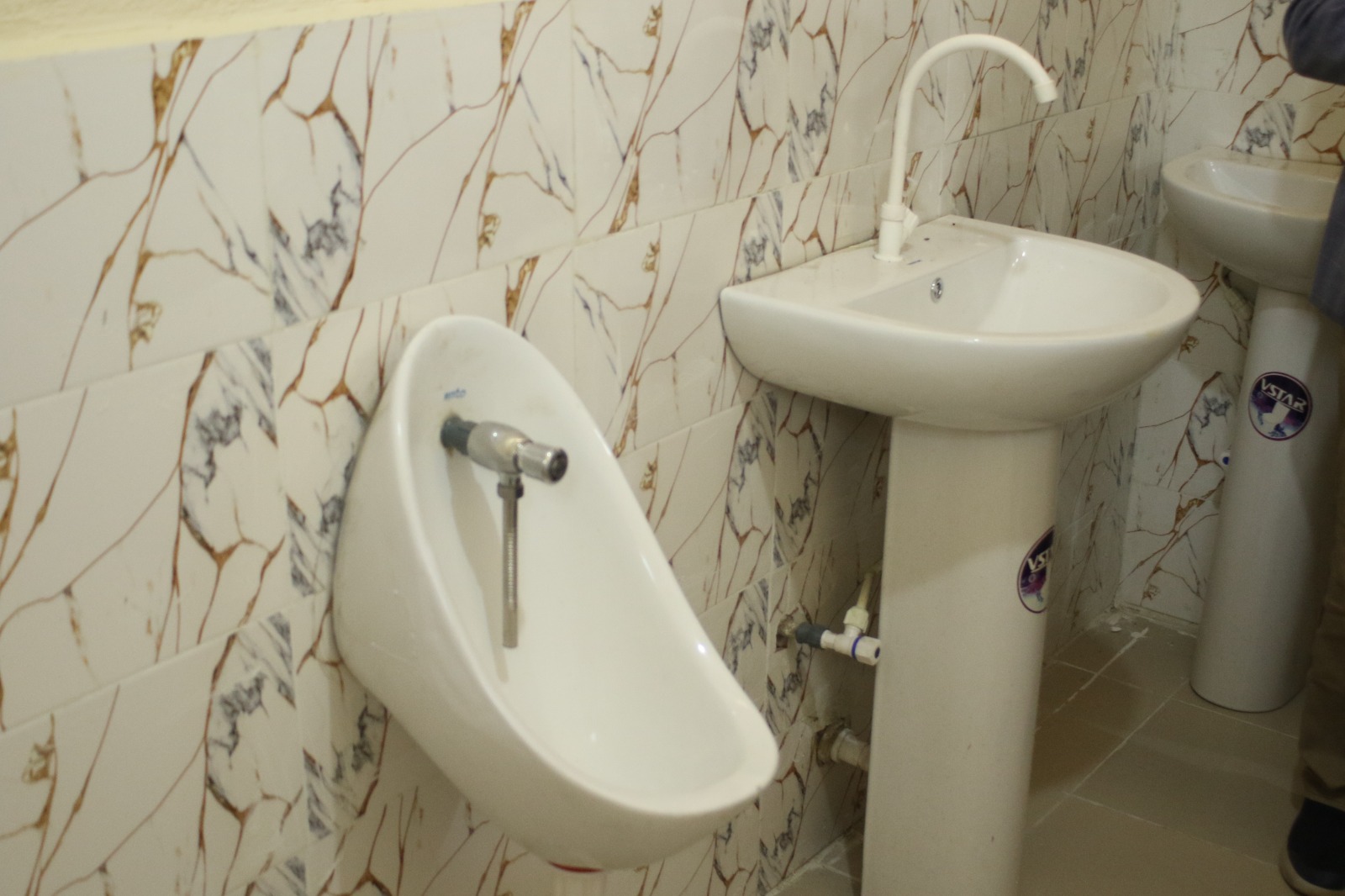
The Vice-Chancellor of the University of Jos, Professor Tanko Ishaya, has described the newly constructed scientific toilet with waste management technology as a remarkable innovation that demonstrates the University’s growing commitment to applying technology to solve everyday problems.
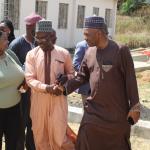
Professor Ishaya stated this while commissioning the facility at the Bauchi Road Campus which is an innovation envisaged by Professor Ponchang Wuyep - the Deputy Director, Directorate of Basic and Advanced Studies of the University with his team, noting that the project represents a forward-looking approach to environmental sanitation, renewable energy generation, and sustainable campus development.
According to Professor Ishaya, “This is another innovation that we are beginning to see, and of course the application of technology—and that is what we are supposed to be doing,” he said. “What we eat and what we bring out should also serve certain areas. The product that comes out is going to be used as biogas for cooking, not for consumption, but for energy. Two years ago when we came for the foundation laying, we didn’t anticipate this outcome, but today we see the structure and what it is achieving,” he added.
Commissioning the facility, the Vice-Chancellor commended the Directorate of Basic and Advanced Studies (DBAS) for their creative thinking and assured that the University will continue to support innovative projects that advance the University’s developmental goals.
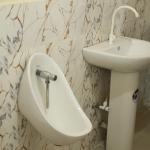
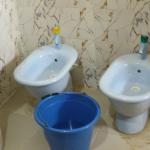
Handing over the project to the University Management, Professor Wuyep, revealed that the facility is the first of its kind in North Central Nigeria. He explained that every component of the toilet was designed with scientific precision—environmentally friendly materials, disabled-friendly access, a dual-unit setup for male and female users, and a specialized plumbing system that separates urine from feces for efficient waste processing.
According to him, the male section contains two toilets and six urinals while the female section has three toilets and two urinals. The plumbing network channels urine and feces into separate chambers for processing. Professor Wuyep further disclosed that the facility is equipped with a biodigester designed to generate biogas for cooking by extracting methane from decomposed fecal matter. “If we are successful, the gas will be supplied to the people cooking here for students,” he said.
Explaining further, he said the urine will be transformed into fertilizer through a biological trapping process and then used in polypots to plant trees across the campus.
“We already have the biological materials that will trap the urine. With time it becomes fertilizer. Once extracted, it will be transferred into polypots and used to plant trees. Our hope is that when this toilet becomes fully operational next year, we will have between 500 and 1,000 trees planted from the bio-fertilizer generated here,” he stated.
He added that the facility will also serve as a research and data collection center, with an MSc student, Mr. Danlami Barira of the Biotechnology Department, already assigned to collect and analyze data throughout his one-year research project.
Professor Wuyep further noted that, with successful implementation, the University could potentially expand the model across all campuses to reach about 50,000 trees in the future, pointing out that such massive afforestation could qualify the University for carbon credit benefits from International Environmental Agencies, similar to what Ahmadu Bello University, Zaria, is set to benefit from its 10,000-tree initiative.
On the feaces processing unit, he explained that the collection tube will be inflated and sealed once it reaches optimum pressure before being taken for analysis. The aim according to him, is to ensure that the gas produced is methane, the key component of biogas, and not other gases such as sulfur dioxide or carbon monoxide which would indicate a failed process. He said engineers have already designed a mechanism for safe gas regulation, storage, and usage.
The project also features a dedicated borehole with a submersible pump to ensure constant water supply. A small security post is also planned to enhance safety around the facility. He described the entire project as a prototype that will be refined and expanded after assessing its performance.
- Log in to post comments