ANSEN 2026: COMMERCIALIZE ACADEMIC RESEARCH FINDINGS, LET TECHNOLOGY, GOVERNMENT AND PEOPLE UNITE TO SOLVE NIGERIA'S SECURITY CHALLENGES - Experts Urge at Unijos
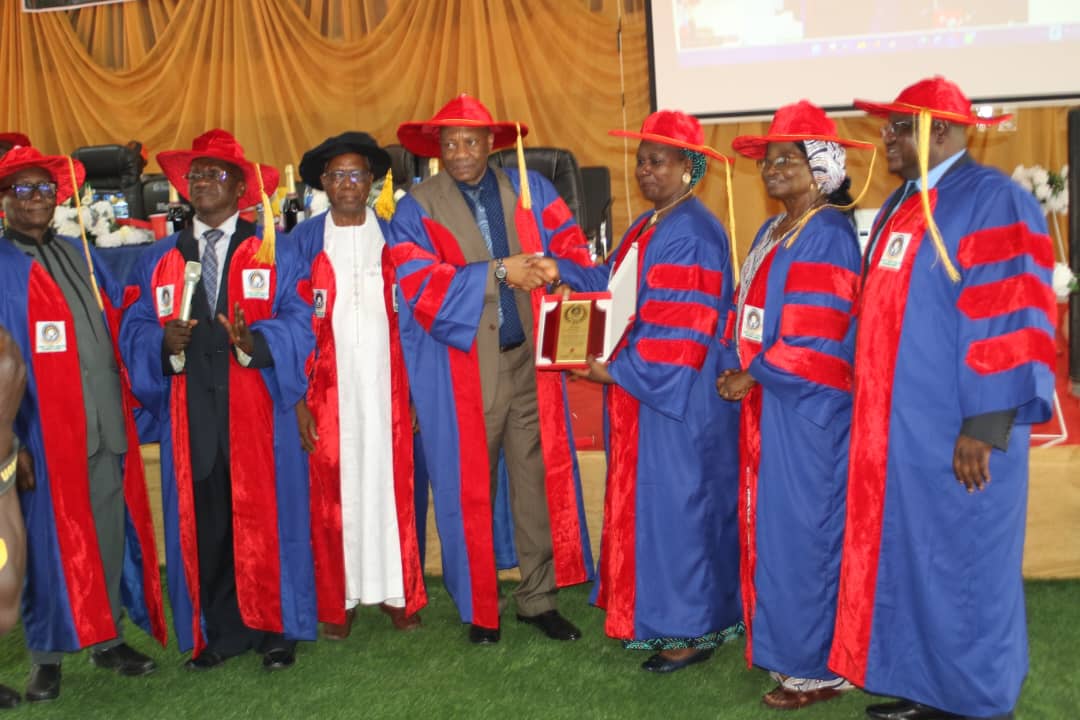
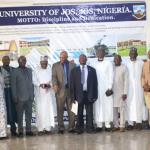
The Academy of Natural Science and Engineering (ANSEN) held its 2026 Annual General Meeting (AGM), Investiture and Induction of New Fellows at the Faculty of Veterinary Medicine Auditorium, University of Jos, Plateau State, Nigeria.
The event brought together fellows of the Academy, government officials, technocrats, academics, students and members of the public for a robust discourse on the theme: "Nigeria's Security Conundrum: Harnessing Science, Engineering and Technological Innovations for Solutions."
In his welcome address, the Chairman of the ANSEN Board of Trustees and Founder, Prof. Salihu Mustapha, expressed appreciation to the University of Jos for hosting this year's AGM. He emphasized the need for the Academy to establish anchor institutions across the country, noting that the University of Jos, with its strong faculties of Engineering and Natural Sciences s well positioned to build a strategic partnership with ANSEN beyond hosting this year's event.
Prof. Mustapha also reiterated the Academy's commitment to gender inclusion, describing it as essential to building a formidable team capable of driving national transformation.
Speaking during the ceremony, ANSEN President, Prof. Danladi Slim Matawal, said the gathering represented more than a celebration of excellence; it was a call to greater innovation, scholarship, engineering and scientific advancement, dedicated to national development and service to humanity.
Highlighting the significance of the conference theme, Prof. Matawal noted that insecurity remains one of Nigeria's most pressing national challenges, requiring urgent multidisciplinary solutions. He said the Academy, with its distinguished community of scientists and engineers, is well positioned to provide research-based expertise and technological solutions to address critical national problems.
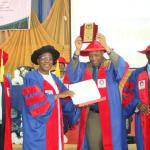
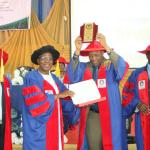
Congratulating the newly inducted fellows, he said their admission into the Academy recognized their outstanding contributions to science, engineering and national development. He urged them to remain committed to expanding the Academy's impact by contributing their knowledge and expertise towards solving national challenges and ensuring that science and engineering remain at the forefront of contributing to Nigeria's development agenda.
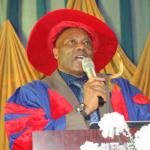
The Guest Speaker, Chief David Daser, President and Chief Executive Officer of the Digital Bridge Institute (DBI), The Nigerian Communications Commission's ICT Centre of Excellence, and a doctoral researcher specialising in public policy, technology and governance, argued that Nigeria's insecurity is not primarily the result of inadequate force.
According to him, "Nigeria's insecurity is not just one enemy, it appears in form of five threats; insurgency, banditry and kidnapping, farmer and Herder clashes, separatism and oil crime and then online crime. Adding that, force alone cannot solve the problem, as it is not mainly about too little force. It is about too little sight, too little knowledge of who people are, too little connection, and too little warning. Science and technology can provide all four if we manage them effectively."
Chief Daser identified three fundamental realities about insecurity in Nigeria. First, he said insecurity is dynamic. "When pressure is applied in one location, it simply shifts elsewhere. Defeat bandits in one state and they relocate to another."
Second, he noted that poverty fuels violence. According to him, there is both "loud violence," which manifests in visible attacks, and "quiet violence," reflected in widespread poverty and deprivation.
Third, he stressed the need to prioritise human security over state security. "For too long, we have asked how to protect the state. The better question is: how do we protect ordinary people?" he said.
Chief Daser emphasised that science, technology, engineering and sound public policy must work together to address Nigeria's security challenges. He argued that the country's security crisis is fundamentally "a system to be designed, not merely a battle to be fought," adding that people constitute the nation's most important infrastructure.
In his concluding remarks, Chief Daser described Nigeria's security challenge as a form of darkness that requires every citizen to "turn on the light." He commended ANSEN for bringing together engineering expertise and visionary leadership in pursuit of solutions that serve the public good.
"There is no greater public good than the safety of our people," he said, adding that Nigerians possess the talent required to build effective security systems; what remains is the collective will to implement them wisely and in the right sequence.
Earlier, the Vice-Chancellor of the University of Jos, Prof. Tanko Ishaya, who served as Host and Chairman of the Public Lecture, received members of the ANSEN Board of Trustees on a courtesy visit.
He praised Prof. Salihu Mustapha for providing visionary leadership to the Academy, noting that its membership includes several former university vice-chancellors and other eminent scholars.
Prof. Ishaya also recognized distinguished members of the Academy, including the Director-General of the Nigerian Building and Road Research Institute (NBRRI), Prof. Samson Duna, with whom he collaborated in developing the curriculum for the Faculty of Engineering at the University of Jos. He equally acknowledged Prof. Danladi Slim Matawal, a former Director-General of NBRRI and current ANSEN President, for his significant contributions to the establishment and growth of the University's Faculty of Engineering.
The Vice-Chancellor thanked ANSEN for choosing the University of Jos to host the 2026 AGM and welcomed the proposed institutional partnership. He expressed optimism that the collaboration would soon be formalized for mutual benefit.
Following the keynote lecture, Prof. Ishaya moderated an engaging interactive session during which participants recommended stronger national policies to support scientific research and innovation. They advocated the establishment of a comprehensive national database of research findings, increased funding for research and the commercialisation of academic discoveries.
Participants observed that commercializing research outputs would not only encourage scientists and engineers to develop practical solutions to national problems but also create wealth, generate employment and contribute significantly to poverty reduction.
The leadership of ANSEN reaffirmed the Academy's commitment to working closely with government, industry and development partners to promote innovation, strengthen research funding and ensure that scientific discoveries are translated into practical solutions for Nigeria's development and security challenges.
Tongdyen D. S. Dachung
- Log in to post comments